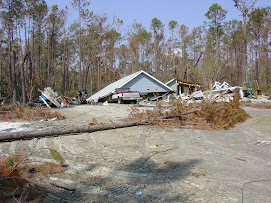
There has been an advertisement run in the print editions of the Sun Herald on Gene Taylor conducting an Issues + Answers lecture sponsored by the University of Southern Mississippi Gulf Park Campus on Friday, February 29, 2008 at the Advanced Education Center auditorium.
Thanks to one of our readers, I was emailed a link to the University press release and I am happy to pass it along to all so interested. Considering the other recipients listed in the address header I am honored Ida thought enough of this blog to pass me the good word.
I will be in attendance and hope we pack the house on the 29th.
sop
Showing posts with label Flood Insurance. Show all posts
Showing posts with label Flood Insurance. Show all posts
Sunday, February 17, 2008
Gene Taylor to Speak on Insurance Reform


Sunday, February 10, 2008
Insurance Complexities: The Myth of State Farm's Financial Insolvency and Conflicts of Interests.
I occasionally run across “fans” of Nassim Taleb, a philosopher/visionary who is changing the way people view world events. His black swan concept, which is the name sake for his latest book, is understood and often repeated as the totality of his theory when in reality it is just a small part of his body of work. Russell and I share an interest in Taleb’s work, an interest that derives from actually reading his two books rather than simply embracing the pop culture lite version repeated in the popular media. This subject of insurance is akin to understanding Taleb and his theories; one can get a slight flavor for the concepts of subjects like wind claims dumping from the media but the nuance and complexities of the subject escape the vast majority of the popular reporting just as Taleb’s theories are revealed completely only by reading his books. Taleb’s Black Swan is an important concept but his central thesis is far more involved. Taleb’s website, named for his first book gives a better clue the larger theory he espouses.
Such is the case with the recently issued GAO report and the concepts surrounding the inherent conflicts of interest possessed by the Write-Your-Own insurer and the possible impacts of that conflict manifested in concepts like wind claims dumping following a multi peril flood event such as a Hurricane. David Rossmiller penned a particularly insightful piece on the GAO report tackling the conflicts of interest conclusions of the GAO head on.
“One, this "inherent conflict of interest" certainly exists, just as it exists whenever you file a first-party property claim. This is not very startling, because it has been said -- wait while my computer comes up with the final tally -- 3,456 kajillion times before in insurance literature. For many of you the following explanation will be something you know already, but many don't know it, so I am going to set it down in writing here. As you may or may not know, when someone makes a liability claim against you, say you ran into them with your car, your insurer owes you a fiduciary duty, assuming a duty to defend arises out of the allegations and the language of the insurance policy. A fiduciary duty is the highest duty imposed by law, and requires one to treat another's interests like one's own, resolving all conflicts of interest in favor or the insured. These type of liability claims are called third-party claims. In contrast, claims you file with your own insurer for damage to your house or other property are called first-party claims. An adversary relationship is assumed to exist between the insurer and insured from the time the claim is filed, and generally speaking, no fiduciary duty arises on the part of the insurer.”Mr. Rossmiller gave his readers a great lesson in the law but also his post implied a great lesson in dealing with an insurer. When a consumer files a first party insurance claim and the adjuster is sent, the insurance company knows a great bit of information in advance of the first visit, including a good idea how the insurance company plans on adjusting the claim. The unsuspecting consumer, who was promised good hands treatment by a good neighbor, has no clue their friendly claims adjuster is actually an adversary, a wolf in sheep’s clothing.
As I pointed out in a post on the concepts of economic transparency and insurance in December this condition is known as Information Asymmetry, “A situation in which one party in a transaction has more or superior information compared to another. This often happens in transactions where the seller knows more than the buyer, although the reverse can happen as well. Potentially, this could be a harmful situation because one party can take advantage of the other party’s lack of knowledge.”
There are public policy implications in these conflicts of interests, both those noted by the GAO and those that are an accepted part of insurance law as explained by Mr Rossmiller. These public policy battles are being played out real time in places like Olympia Washington and Washington DC by people, including politicians who have the ability to see past the law to a greater collective good.
Is State Farm Overextended?
I have read remarks like this one several times in the blogosphere and am again reminded of Taleb and his theories:
(My independent insurance agent) “talked me out of using State Farm (who had the lowest quote), because he said that the opinion of a lot of insurance brokers was that State Farm had overextended itself, and might not be able to pay all of their claims in a widespread disaster. He directed me to a company that was about 20 per cent Higher than State Farm.”The luck involved with that scenario is stunning. Though I don’t think it is possible to buy State Farm insurance from an independent insurance agent lets assume this statement is true. What were the motivations of that independent agent? To maximize their own commission a la commissioned retail stock brokers? Assuming this poster had combination wind-water damage and their WYO insurer paid them under both wind and flood there is also a large element of luck that the damage was distinguishable as appears the case with McIntosh.
As a group we do not recognize the influence of pure chance at work in our daily lives as we are far more suited to pat ourselves on the back and stroke our egos than see true reality. A central part of Taleb’s observations that deal with how we humans make sense of events was best summed up by Taleb himself when he wrote:
“It is high time to recognize that we humans are far better at doing than understanding, and better at tinkering than inventing. But we don't know it. We truly live under the illusion of order believing that planning and forecasting are possible…..So while we try to make sense of how State Farm adjusted their multi peril claims here after Katrina in terms of misguided notions like “they had to commit fraud or they would have gone bankrupt”, it would help to arm ourselves with some facts including basic financial facts such as after paying almost $4 billion dollars in claims, State Farm’s Property and Casualty Subsidiary still had over $3.5 billion dollars of “unassigned surplus” while posting over $2 billion dollars of profits in the two years ended December 31, 2006. That’s right, State Farm actually made money despite paying those Katrina related claims.
(we) are too bathed in enlightenment-style (notion of) cause-and-effect and cannot accept that skills and payoffs may have nothing to do with one another.”
For those interested in State Farm’s financial condition the last audit of their P&C subsidiary can be found here.
Next up: Differing views on the problems with NFIP and some suggested solutions.
sop
Friday, February 8, 2008
Landrieu Legislation to Extract FEMA's Head Out of Their Ass.....
Bill creates insurance oversight
Plan audits firms in flood program
Tuesday, February 05, 2008
By Rebecca Mowbray
On the heels of a federal report that found "an inherent conflict of interest" in having private insurance companies determine how much the government should pay on flood claims, Sen. Mary Landrieu, D-La., plans to introduce legislation creating an ombudsman to strengthen financial oversight of the National Flood Insurance Program.
Her bill would create the position within the Federal Emergency Management Agency to audit and monitor insurance companies and their subcontractors that do work for the government flood program.
The "report reiterates what we've long known -- when it comes to making sure the big insurance companies are living up to their promises, there's no one at the NFIP minding the store," Landrieu said in a prepared statement. "My legislation would create an independent office to make sure private insurers are acting in good faith, giving their customers the coverage they paid for. This ombudsman would be isolated from the political pressures of the powerful insurance lobby and have broad authority to hear and investigate complaints and stand up for insurance policyholders and taxpayers alike."
Homeowners policies generally exclude coverage for flood damage, so people guard against damage from rising water by buying policies from the National Flood Insurance Program. Flood policies are issued by the federal government, but private companies sell them alongside their homeowners products and determine the flood claims for the government after disaster strikes.
Consumer advocates, plaintiffs attorneys and individual homeowners began to question the arrangement after Hurricane Katrina, when private insurance companies had the power to determine whether damage was caused by wind, which they pay for, or water, which the government covers.
A study released last week by the Government Accountability Office validated those concerns. It found an "inherent conflict of interest" in having private companies with a financial stake in the outcome determine who pays for what. The report recommended that the flood program secure access to the wind files on homes that had flood damage to make sure the government is not overpaying, but FEMA resisted that suggestion.
Landrieu plans to introduce legislation to create Flood Insurance Accountability Act of 2008 before Congress adjourns for its Presidents Day recess Feb. 18. Landrieu's bill may come up for debate as the Senate considers overhauling the flood program before its authorization expires in September. The House of Representatives passed a flood insurance reform bill last fall.
Because other measures in Congress contemplate raising flood insurance rates on some homes that were built before the flood program was created in 1968, Landrieu said it's important to make sure that the program isn't subsidizing corporations before it raises premiums on homeowners.
"At a time when some in Congress are talking about raising flood insurance premiums on middle- and lower-income Louisianians, we need to make sure that this program is operating as efficiently as possible. This necessary step would fill a tremendous gap in the current oversight of the program," she said.
Landrieu's office said that the inspector general's office at the Department of Homeland Security, which houses FEMA, is not sufficient to monitor the flood program because the department has so many other responsibilities.
Her proposed ombudsman would have a broad mandate to investigate allegations of fraud and abuse, conduct random and systematic audits of companies working with the flood program, and investigate consumer complaints. A toll-free hotline would be established to make it easier for people to report concerns.
The ombudsman would have the power to subpoena computer and phone records and to compel testimony from people whose work relates to flood claims. The new position would have the power to investigate both insurance companies and vendors that provide claims adjusting, engineering and record-keeping services for the flood program.
To prevent the position from falling to a political appointee, Landrieu's bill will require the ombudsman to have an accounting, auditing, legal or management oversight background.
The ombudsman will report directly to the FEMA administrator, make an annual report to Congress, and have the power to recommend policy changes to Congress or the president. To ensure that the ombudsman is independent, the FEMA administrator will not be able to interfere with investigations. If the ombudsman is fired, FEMA will have to explain the dismissal to Congress within 15 days.
If evidence of overbilling is found, the ombudsman can levy damages worth three times the amount of the original claim. Cases of possible fraud or abuse would be referred to the U.S. Department of Justice.
Bob Hunter, director of insurance at the Consumer Federation of America, said that with FEMA turning a blind eye to concerns that insurance companies may be ripping off the federal government, Landrieu's bill is a good idea.
"No matter what the evidence is, the insurance companies can do no wrong. You need somebody who's there all the time," said Hunter, who ran the flood program in the 1970s.
If the ombudsman office is truly independent and has the money and staff to carry out its investigatory mandate, Hunter said, it shouldn't matter that it's located within FEMA.
Thursday, February 7, 2008
Florida Insurance Hearings: Not Every Company is Losing Money
We noted in our continuing coverage of the Florida Senate Hearings concerning their property insurance mess that Allstate used unapproved short term weather models to make actuary decisions on the purchase of reinsurance. Those poor business decisions have caused losses for Allstate's Florida operating company, losses they now wish to dump on Florida consumers.
Allstate has since been joined by Nationwide and Farm Bureau in admitting the use of unapproved short term models to drive reinsurance purchase decisions. Farm Bureau also admitted losses deriving from that fact.
In a refreshing change, we have a story from the Miami Herald that Florida based American Strategic Insurance testified Tuesday they used approved long term models and have profited from the better decisions that resulted from that fact.
As I opined on the Allstate Yahoo Finance Message Board, the testimony of Allstate, Hartford, Farm Bureau and Nationwide Insurance reminded me of the confessions of an accomplished three card monte dealer. They expect their customers to foot their mistakes; both the mistaken decision to purchase more reinsurance and the decision to buy expensive reinsurance at all for that matter, rather than the cheaper variety offered by the State of Florida. Is insurance the only line of business that doesn't have to pay for their business mistakes? In the small business world where I come from there is no government backstop save bankruptcy so the concept of profit entitlement is foreign to me.American Strategic, a St. Petersburg company that managed to cut rates an average 11.5 percent due to the money it saved by buying a portion of its reinsurance from the Florida Hurricane Catastrophe Fund.
The company also lowered rates another 9.5 percent later in the year, mostly because it paid a lower cost for additional reinsurance bought in the private market and had fewer claims and better cost controls.
''Generally speaking, apples to apples, reinsurance costs were coming down for everyone in 2007,'' said CEO John Auer, who expects to see another drop this year.Unlike many insurers, American Strategic said it is writing new homeowners policies, even some on the coast. The company has 260,000 policies, making it the third-largest insurer behind state-run Citizens and State Farm.
Sen. J.D. Alexander, R-Winter Haven, questioned American Strategic's heavy use of reinsurance to cover potential losses. He asked if it would be in financial trouble if its reinsurers, especially the state catastrophe fund, couldn't make good on their
policies.Auer said the company, started 10 years ago, has already lived through highs and lows in the reinsurance market, noting that reinsurers are pleased with American Strategic's management. And A.M. Best raised American Strategic's rating to A-minus from B++ last December.
In any other line of business the shareholders, not the public would be eating these business mistakes. So while we congratulate American Strategic and their owners for their ability to profit while their competitors languish we also hope free market principles apply equally to those who make bad business decisions.
Simply put there is a point where the insurance industry needs to take ownership of their mistakes. The mess in Florida illustrates exactly why so few present day insurers would survive in a truly competitive marketplace without that anti-trust exemption they currently enjoy. Our position is that the free marketplace should reign supreme where ever possible and the culture of big insurance profit entitlement should end.
Finally the events in Florida now have me wondering if our state regulators here in Mississippi have been hoodwinked by similar tactics. Our wind pool premiums are in the stratosphere, largely due to the astronomical cost of reinsurance. Given what we have learned through the application of Sunshine to the insurance industry by the Sunshine State, I challenge Mr. Chaney to hold rate hearings for any increases in property insurance, not just those he arbitrarily deems too high. We have quickly arrived at the point where he should put the interests of the citizens of this state ahead of the profit interests of these out of state insurance companies.
sop
Friday, February 1, 2008
FEMA Code Violation on Fisher Island Potentially Threatens National Flood Insurance Participation for Miami Beach residents
From Fox Business News
Thursday, Jan. 31 2008
FEMA Code Violation on Fisher Island Potentially Threatens National Flood Insurance Participation for Miami Beach residents
Unchecked violations of Floodplain Management regulations could cause FEMA to put Miami Beach on probation and eventual suspension from the National Flood Insurance Program (NFIP) which currently provides a 15% discount on flood insurance premiums for property owners in Miami Beach. If the city fails to enforce its regulations, it could result in higher flood insurance rates for policy holders. In suspended cities where flood disasters occur, certain types of disaster assistance from the federal government are not available at all.
The City of Miami Beach is currently rated as Class 7 out of 10 (with 10 being the lowest) on NFIP's Community Rating System. This rating entitles property owners in Miami Beach to receive a 15% discount on flood insurance premiums. NFIP bases its ratings on local governments' compliance with federal requirements and on local government efforts to eliminate or mitigate exposure to flood damage through regulation. Each 1-point increase in class rating represents an extra 5% discount on premiums, with a Class 1 rating carrying a 45% discount and a Class 10 carrying no discount at all. As of November 2007, Miami Beach had 48,233 flood insurance policies in effect, insuring $7,491,479,400 of property.
I know there is a Miami Valley in Ohio (named after the Miami Indians). But is there a Miami Beach Ohio? Is it just west of Cleveland on Lake Erie? Because if they are talking about a Beach in Florida, why on earth are they getting a discount?

Just Before Sunset
Miami Beach, OH
Thursday, January 31, 2008
GAO National Flood Insurance Program Report: A View from Outside the Industry
Yesterday we pointed out several glaring omissions and factual inaccuracies in the Reuters drive by reporting on the General Accounting Office NFIP report. Today we see better coverage courtesy of Anita Lee at the Sun Herald. In addition to our analysis, Ms Lee points out some of the other conclusions reached by the GAO on the flaws inherent to the current program design:
The first flaw involves the three wise monkeys and the concept of see no evil, hear no evil and speak no evil. While that old proverb works well in our personal conduct it is an invitation to disaster when used to manage a federal program:
The flood-insurance program cannot accurately determine flood-claim payments on properties that were subject to both winds and flooding, because FEMA does not collect information on wind claims and does not require companies to explain how they distinguish between wind and flood losses.The second flaw involves the security the program gives to it's participants, even if property owner contracts for wind and flood insurance there is no way to know if all the damage will be covered due to Catch-22 like scams such as the anti concurrent clause built into wind policies and other coverage differences between flood and wind policies:
Property owners with separate homeowner, wind and flood insurance policies cannot know prior to a storm whether all their damage from a hurricane will be covered because of differences in the policy limits. The NFIP cedes the damage determination to the insurance company.The system as currently designed fosters legal disputes because of Catch-22 scams such as the Anti Concurrent clause.
Legal disputes between wind and flood coverage have increased because of insurance companies' anti-concurrent causation clauses that attempt to exclude coverage of wind damage if flooding contributed to the loss.Most interesting is that FEMA seems to oppose the common sense recommendations, especially those that would require the bureaucratic FEMA monkeys to remove their blinders and examine how flood claims are adjusted and the damage is apportioned in multi peril events such as hurricanes by private insurers.
Given the insurance money that supports Senate politicians like "Renfroe" Richard Shelby and "Pac-Man" Christopher Dodd we certainly understand their insistence to sticking with the current "heads I win, tails you lose" setup for coastal residents whereby wind policies are essentially meaningless pieces of paper and taxpayers ultimately bear the burden for multi peril events like Hurricanes. However, from the appearance of Gene Taylor's remarks quoted in the Sun Herald, the Catch-22 days of ordinary citizens unable to rely on their wind policies while insurance companies laugh all the way to the bank appear numbered. Thanks to the internet the truth will win this debate. Today's Sun Herald story:
GAO points up conflict of interest
Insurers deciding in wind vs. water
By MARIA RECIO
SUN HERALD WASHINGTON BUREAU
The Government Accountability Office issued a report Wednesday on the National Flood Insurance Program that concluded insurers have "an inherent conflict of interest" in determining flood damage the federal program must pay, with the wind damage covered by private companies.
"I applaud the GAO for confirming that insurance companies have an inherent conflict of interest when they are allowed to determine whether to assign damages to their own wind-insurance policies or to the federal flood-insurance policy claims," said Rep. Gene Taylor, D-Bay St. Louis, who lost his home in Hurricane Katrina.
The GAO concluded the program needs greater transparency and oversight of wind- and flood-damage decisions. The agency is the congressional watchdog arm and frequently investigates at the request of members.
"The report reinforces my proposal," said Taylor, "to give homeowners the option to buy wind and flood coverage in the same policy." The House passed Taylor's provision in September but the bill is stalled in the Senate.
"I urge the Senate to pass this legislation in order to stabilize the insurance market in coastal states," Taylor said. "I strongly support GAO's recommendations that insurance companies be required to turn over their wind-claims files so that FEMA can verify that the companies applied the same standards to the flood insurance claims as to their own wind claims."
According to the GAO, FEMA opposes the recommendation, which prompted Taylor to say, "I am disappointed, but not surprised, that FEMA opposes that recommendation. FEMA needs to recognize that its oversight responsibility is to protect federal taxpayers, not insurance companies."
The GAO also concluded:
• The flood-insurance program cannot accurately determine flood-claim payments on properties that were subject to both winds and flooding, because FEMA does not collect information on wind claims and does not require companies to explain how they distinguish between wind and flood losses.
• Property owners with separate homeowner, wind and flood insurance policies cannot know prior to a storm whether all their damage from a hurricane will be covered because of differences in the policy limits. The NFIP cedes the damage determination to the insurance company.
• Legal disputes between wind and flood coverage have increased because of insurance companies' anti-concurrent causation clauses that attempt to exclude coverage of wind damage if flooding contributed to the loss
Wednesday, January 30, 2008
Pee on My Leg and Say It's Raining Part 2: Reuters Story Contains Glaring Omissions and Falsehoods
After I read yesterday's Reuters story on the fight to reform the flood program I thought it strange it contained this paragraph which I knew to be inaccurate:
The Senate bill would extend the NFIP for five years and improve flood maps used in the program. But a vote by the full Senate on the bill has been blocked by lawmakers from Louisiana who are concerned that it would boost insurance rates there.
Fast forward to today and this Reuters story which contains almost the exact same wording for the reason for the hold on the senate version of NFIP re authorization:
The NFIP's post-Katrina debt would be forgiven under a bill approved in October by the Senate Banking Committee. The Senate bill would extend the NFIP for five years. But a vote by the full Senate on it has been blocked by Louisiana lawmakers who are concerned it would boost insurance rates in their state.
The second story, concerning the release of the GAO report on the National Flood Insurance Program, boiled the report down the following:
The GAO, the investigative arm of Congress, said questions remain about the Federal Emergency Management Agency's handling of flood-damage claims processed by private insurers under the National Flood Insurance Program (NFIP).
The GAO urged Congress to empower the agency to examine both wind and water claims data related to hurricane damages. It also said state regulators need to strengthen licensing and training requirements for insurance adjusters.
Alabama Republican Rep. Spencer Bachus said the GAO report contains "sensible recommendations" and deserves further discussion in the House of Representatives Financial Services Committee, where he is the ranking Republican member.
However, while Rep. Bachus is the ranking Republican member of the committee Mr. Drawbaugh evidently did not see fit to report on the reactions of the Democrats running the House Financial Services Committee to the GAO report they ordered. Curious.
I also found it equally strange that Mr Drawbaugh as did not report on the "inherent conflict of interest" in the current system of private wind insurers adjusting flood claims or the problems associated with damage related to multi peril catastrophes like hurricanes contained in the GAO report:
Insurance coverage gaps and claims uncertainties can arise when coverage for hurricane damage is divided among multiple insurance policies. Coverage for hurricanes generally requires more than one policy because private homeowners policies generally exclude flood damage. But the extent of coverage under each policy depends on the cause of the damages, as determined through the claims adjustment process and the policy terms that cover a particular type of damage. This process is further complicated when the damaged property is subjected to a combination of high winds and flooding and evidence at the damage scene is limited. Other claims concerns can arise on such properties when the same insurer serves as both NFIP’s write-your-own (WYO) insurer and the property-casualty (wind) insurer. In such cases, the same company is responsible for determining damages and losses to itself and to NFIP, creating an inherent conflict of interest.
Though we are not so called "professional" news reporters at the Insurance Issues Forum, I was able to land a copy of Senator Vitter's letter to Senators Dodd and Shelby by contacting Gene Taylor's office and simply asking for it. Since Mr. Drawbaugh did not see fit to speak with either of Louisiana Senators or HR3121 sponsor Rep Gene Taylor I guess it is understandable, though somewhat unprofessional that he reported a false reason for the hold on the Senate re authorization of the National Flood Insurance Program. Concerns over "boosting insurance rates" was not the reason Senator Vitter had a problem with the Senate version of the bill, rather:
I believe any legislation reforming the flood insurance program must make an increase in the maximum coverage levels available to policyholders. As you know, your bill does not do this. The current coverage levels have not been increased since 1994. With inflation and increased home prices since that time, the current coverage levels are severely outdated. The bills passed by the U.S. House of Representatives last and this Congress increased the current maximum levels of $250,000 for residential properties and $500,000 for non-residential properties to $335,000 and $670,000 respectively. These reasonable adjustments in the coverage levels would bring more certainty and affordability to the insurance market.
Also, flood insurance reform legislation should allow policyholders new lines of optional coverage, including coverage for business interruption and full replacement costs of contents. Businesses in Louisiana continue to suffer as we recover from Hurricanes Katrina and Rita, and skyrocketing insurance costs and fewer providers offering coverage remain among the most significant barriers to full economic recovery. These new coverage options, which could be offered at market rates so as not to add any additional financial strain on the program, would go a long way in providing some stability and affordability to the insurance market.
Additionally, I believe Congress must address the overall insurance crisis along the Gulf Coast centered on the lack of coverage options and affordable rates for wind damage. Lack of available or affordable general liability coverage including wind coverage is now one of the single biggest obstacles to recovery. Rates have skyrocketed well beyond what seems necessary to cover the risk and are not abating. Either wind coverage should be added to the National Flood Insurance Program at market rates as the House-passed bill does, or we must take other action outside the flood insurance program to address the broader insurance crisis. This could include a catastrophic backstop, similar to what we have for terrorism risk insurance.
We stand ready to correct any factual inaccuracies we find in hard news reporting on this issue, which impacts so many along America's coastlines. Reuters owes us a correction.
sop
Pee on My Leg and Say It's Rainin': Big Insurance Shillin' for Flood "Reform"
Welp folks, this Cowboy has been tellin' anyone who'd listen that them insurance companies are a bunch of fancy crooks stealing from the common man many ways. This Cowboy run across one of them scams yesterday. Ole big business Bush and insurance waterboy Chris Dodd want to do us a "favor" and "fix" the flood program. All this Cowboy can say is when these big business lackeys want to fix somethin' you best hold on to yer wallets boys 'cause the fixin' is in all right. Against the people!
Lets look at the "favor" ole Dodd wants to give us.
Awash in debt, U.S. flood insurance under scrutiny
Tue Jan 29, 2008 1:47pm EST
By Kevin Drawbaugh
WASHINGTON (Reuters) - Swimming in red ink and scheduled to expire within months if not renewed, the troubled National Flood Insurance Program (NFIP) is about to encounter another round of criticism this week on Capitol Hill.
Congressional investigators are expected to call for closer scrutiny of how insurers handle homeowners' damage claims from storms in which both wind and water play a destructive role, as they did in the hurricanes of 2005, said sources familiar with the preparation of a report set for release within days.
The Government Accountability Office (GAO) report is expected to focus especially on insurers that sell both wind and flood policies to the same homeowner, a situation the GAO previously has said poses a potential conflict of interest.......
This is where it gets good folks. Remember the insurance industry shills like Robert Hartwig and Chris Dodd say Gene Taylor's bill will break the budget even though it calls for wind premiums to be actuarially sound. Who is breakin' the bank folks? Well ole Dodd of course. He dumps the flood deficit (a big chunk caused by wind claims dumpin') on the taxpayers.
The government is involved in the market because the private sector on its own does not adequately cover flood risk. Most homeowners' policies cover wind damage, but not flooding. The GAO has previously criticized FEMA's stewardship of the program and questioned how much money the agency pays private insurers for flood claims. Katrina and the other hurricanes of 2005 left the NFIP $17.3 billion in debt to the U.S. Treasury.
A FEMA spokeswomen declined to comment on the report.
The Senate bill would not expand the NFIP to cover wind damage, as was proposed in a bill approved by the House in September. In another difference with the Senate, the House bill would not forgive the NFIP's debt.
The Bush administration has threatened to veto the House bill. The insurance industry opposes expansion to cover wind.
Oh boy how does that "warm" rain feel folks? So them Reuters boys think that 17 billion can't be paid back? Well they haven't talked to Gene Taylor or looked back in history to see that we did it back in the 1980s.
All we want is a hand, not a hand out and this Cowboy and millions of folks like him stand ready to pay our way. What we ain't gonna stand for is crooks like big insurance and their waterboy Chris Dodd prentendin' like they is hepin' us when they is really stickin' it to us.
Thursday, January 17, 2008
Breaking News: Florida Expands Suspension of Allstate
This Cowboy hopes some folks up Jackson way are taking notes.
Florida Expands Suspension of AllstateThursday
January 17, 4:07 pm ET
By Brent Kallestad, Associated Press Writer
Florida Suspends Allstate From Writing All Sorts of New Policies in the State
TALLAHASSEE, Fla. (AP) -- A day after telling Allstate Corp. to stop writing new car insurance policies in Florida, state regulators told the company to stop writing any new business in the state -- including home insurance.
Insurance Commissioner Kevin McCarty had initially planned to clamp down on just the company's auto business and its four companies doing business in Florida. But he expanded the suspension Thursday to include Allstate's 10 companies nationally and all of its insurance lines.
McCarty abruptly ended a scheduled two-day meeting Tuesday after just two hours, angered that Allstate officials failed to fully comply with a subpoena seeking information on property coverage rates.
"We're in the business of protecting homes, protecting automobiles and that's what we want to do because that's the role we play in this economy, in this marketplace," Allstate spokesman Adam Shores said Thursday. "And we want to continue to do that."
The suspended companies are Allstate Floridian Insurance Co., Allstate Indemnity, Allstate Property & Casualty Insurance Co., Allstate Insurance Co., Allstate Fire and Casualty Insurance Co., Encompass Insurance Co. of America, Encompass Indemnity Co., Encompass Floridian Insurance Co. and Encompass Floridian Indemnity Co.
Gov. Charlie Crist applauded the expended supension, which will last until the state gets the materials it demanded with the subpoena.
"I don't know why you'd want to keep 'em," said Crist, a longtime antagonist of many insurance companies he believes have gouged Floridians since the hurricanes that struck the state in 2004 and 2005. "I don't know why you'd want to pay them money for anything."
Allstate shares fell $1.35, or 2.7 percent, to $49.58 in late trading Thursday amid a broad market pullback.
Friday, December 14, 2007
"Claims Dumping" - A Primer
 There is an informal brotherhood of those slabbed and/or destroyed. Among that brotherhood all know at least one person whose house was destroyed by wind but was only paid their flood coverage (if they had it). We are not professionally trained licensed engineers but in some cases the cause was most evident, such as in the picture of this house in Lakeshore which was also flooded but not subjected to wave action.
 This is a picture of the house across the street also smashed and flooded. The window in the house was removed by the owner as they salvaged some of their contents from the interior. In both cases the contents of these houses stayed with the house instead of being swept from it like so many others.
 This picture finishes the story, notice the house down the street left standing. All the homes on the street were built within a year or so of each other by the same builder. Also notice the hole in the roof of the house down the street that stood. How is it that the majority of the houses on this street stood while three houses in close proximity of one another were reduced to rubble? A tornado or mini tornado is the cause. There was a line of snapped trees that lined up perfectly with the woods across the field from the destroyed houses on this street and through to the woods on the other side. I personally know of at least one such resident who was only paid on their flood policy instead of their private wind policy. That's right ladies and gents, the bill was on you, the taxpayers.
Wednesday, December 12, 2007
Insurance 101
Here are a few key definitions and concepts which might help those new to the insurance forum more rapidly understand the nature of the insurance problems our society faces. I will add more as time allows and hopefully we might combine them with other concepts.
What is Insurance?
One definition of insurance is a system to make large financial losses more affordable by pooling the risks of many individuals and business entities and transferring them to an insurance provider for a premium. More basically insurance is the process of the assumption of risk from one party to another for a fee.
The key to understanding insurance is the concept of risk assumption. In insurance terms risk is the chance of loss of that which is insured.
For the purposes of this web site the main type of insurance studied is property/casualty in general and catastrophe insurance (CAT) in particular. ISO defines a catastrophe as an event that causes $25 million or more in insured property losses and affects a significant number of property/casualty policyholders and insurers.
What is the role of insurance providers?
Insurance providers core function in society is that of helping to manage risk. Insurance plays a vital role in helping individuals and businesses prepare for and recover from the potentially devastating effects of a disaster such as a catastrophic hurricane or earthquake.
Insurance providers help society pre-pay for their risk needs. Catastrophic insurance providers have a special role in helping entire communities pre-pay for their disaster needs. Because their losses are more volatile the property/casualty insurers invest largely in high-quality liquid securities, which can be sold quickly to pay claims resulting from a major hurricane, earthquake or man-made disaster such as a terrorist attack.
Who are the leading providers?
Data from the National Association of Insurance Commissioners (NAIC) identifies the 10 leading writers of non-governmental property/casualty insurance by direct premiums written during the 2006 calendar year.
- State Farm Group 10.0%
- American International Group 7.6%
- Zurich Insurance Group 5.6%
- Allstate Insurance Group 5.6%
- Travelers Group 4.4&
- Liberty Mutual Insurance Group 3.7%
- Nationwide Group 3.2%
- Berkshire Hathaway Insurance Group 3.1%
- Progressive Group 2.9%
- Hartford Fire & Casualty Group 2.4%
Subscribe to:
Posts (Atom)