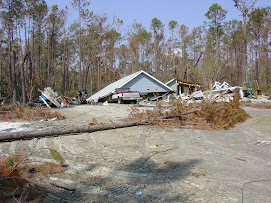
Yesterday we pointed out several glaring omissions and factual inaccuracies in the Reuters drive by reporting on the General Accounting Office NFIP report. Today we see better coverage courtesy of Anita Lee at the Sun Herald. In addition to our analysis, Ms Lee points out some of the other conclusions reached by the GAO on the flaws inherent to the current program design:
The first flaw involves the three wise monkeys and the concept of see no evil, hear no evil and speak no evil. While that old proverb works well in our personal conduct it is an invitation to disaster when used to manage a federal program:
The flood-insurance program cannot accurately determine flood-claim payments on properties that were subject to both winds and flooding, because FEMA does not collect information on wind claims and does not require companies to explain how they distinguish between wind and flood losses.The second flaw involves the security the program gives to it's participants, even if property owner contracts for wind and flood insurance there is no way to know if all the damage will be covered due to Catch-22 like scams such as the anti concurrent clause built into wind policies and other coverage differences between flood and wind policies:
Property owners with separate homeowner, wind and flood insurance policies cannot know prior to a storm whether all their damage from a hurricane will be covered because of differences in the policy limits. The NFIP cedes the damage determination to the insurance company.The system as currently designed fosters legal disputes because of Catch-22 scams such as the Anti Concurrent clause.
Legal disputes between wind and flood coverage have increased because of insurance companies' anti-concurrent causation clauses that attempt to exclude coverage of wind damage if flooding contributed to the loss.Most interesting is that FEMA seems to oppose the common sense recommendations, especially those that would require the bureaucratic FEMA monkeys to remove their blinders and examine how flood claims are adjusted and the damage is apportioned in multi peril events such as hurricanes by private insurers.
Given the insurance money that supports Senate politicians like "Renfroe" Richard Shelby and "Pac-Man" Christopher Dodd we certainly understand their insistence to sticking with the current "heads I win, tails you lose" setup for coastal residents whereby wind policies are essentially meaningless pieces of paper and taxpayers ultimately bear the burden for multi peril events like Hurricanes. However, from the appearance of Gene Taylor's remarks quoted in the Sun Herald, the Catch-22 days of ordinary citizens unable to rely on their wind policies while insurance companies laugh all the way to the bank appear numbered. Thanks to the internet the truth will win this debate. Today's Sun Herald story:
GAO points up conflict of interest
Insurers deciding in wind vs. water
By MARIA RECIO
SUN HERALD WASHINGTON BUREAU
The Government Accountability Office issued a report Wednesday on the National Flood Insurance Program that concluded insurers have "an inherent conflict of interest" in determining flood damage the federal program must pay, with the wind damage covered by private companies.
"I applaud the GAO for confirming that insurance companies have an inherent conflict of interest when they are allowed to determine whether to assign damages to their own wind-insurance policies or to the federal flood-insurance policy claims," said Rep. Gene Taylor, D-Bay St. Louis, who lost his home in Hurricane Katrina.
The GAO concluded the program needs greater transparency and oversight of wind- and flood-damage decisions. The agency is the congressional watchdog arm and frequently investigates at the request of members.
"The report reinforces my proposal," said Taylor, "to give homeowners the option to buy wind and flood coverage in the same policy." The House passed Taylor's provision in September but the bill is stalled in the Senate.
"I urge the Senate to pass this legislation in order to stabilize the insurance market in coastal states," Taylor said. "I strongly support GAO's recommendations that insurance companies be required to turn over their wind-claims files so that FEMA can verify that the companies applied the same standards to the flood insurance claims as to their own wind claims."
According to the GAO, FEMA opposes the recommendation, which prompted Taylor to say, "I am disappointed, but not surprised, that FEMA opposes that recommendation. FEMA needs to recognize that its oversight responsibility is to protect federal taxpayers, not insurance companies."
The GAO also concluded:
• The flood-insurance program cannot accurately determine flood-claim payments on properties that were subject to both winds and flooding, because FEMA does not collect information on wind claims and does not require companies to explain how they distinguish between wind and flood losses.
• Property owners with separate homeowner, wind and flood insurance policies cannot know prior to a storm whether all their damage from a hurricane will be covered because of differences in the policy limits. The NFIP cedes the damage determination to the insurance company.
• Legal disputes between wind and flood coverage have increased because of insurance companies' anti-concurrent causation clauses that attempt to exclude coverage of wind damage if flooding contributed to the loss