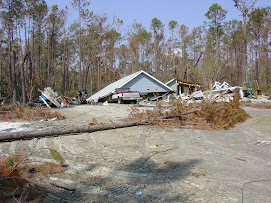
How the insurance industry is protecting their proftis, not policy holders, when natural disasters strike.
Full page add in WSJ (C5) for a program this Sunday, March 2 at 10pm EST.
Sounds interesting. I don't get CNBC (We are a basic cable kind of family), but maybe it will show up as a clip on the web.
Showing posts with label Russell. Show all posts
Showing posts with label Russell. Show all posts
Wednesday, February 27, 2008
Cashing In On Catastrophe


Friday, February 15, 2008
The Insurance Industry's GREAT ESCAPE
NAIC President Questions Motives of OFC Supporters
KANSAS CITY, Mo. (Feb. 15, 2008) — Sandy Praeger, President of the National Association of Insurance Commissioners (NAIC) and Kansas Insurance Commissioner, in a letter yesterday, reiterated the strengths of state-based regulation and reasserted opposition to federal legislation that would establish an optional federal charter (OFC).
A few relevant parts of the letter:
…allowing insurers to pick their regulator threatens a regulatory “race-to-the-bottom.” This scheme would be especially dangerous in property/casualty insurance, where families and businesses faced with a storm, fire, illness or injury often rely on a hands-on regulator to make insurers keep their promises and to help rebuild quickly after an unforeseen disaster. The push for an OFC is, in reality, nothing more than a call for little or no regulation.
There are presently more than 11,000 individuals working in state insurance departments across this country who help to protect insurance consumers. It takes quite an imagination to assume the Treasury Department could assume even a partial role in regulating insurance without creating a huge bureaucracy. The plain and simple truth is optional federal chartering would create a new federal bureaucracy from scratch and allow insurance companies to “opt out” of comprehensive consumer protections and state oversight. Current proposals would gut consumer protection, while outsourcing most critical regulatory functions to an industry-run self-regulatory organization.
Thursday, February 7, 2008
Another Type of Insurance Problem
One insurance suit settled, one begun
The Desmoines Register
February 7, 2008
By S.P. DINNENREGISTER BUSINESS WRITER
Another Des Moines area insurance company has run afoul of Minnesota’s attorney general over the sale of equity-indexed annuities, and now Iowa regulators say they’ll look to see whether any similar action is warranted here.Minnesota Attorney General Lori Swanson on Thursday accused AmerUs Group and American Investors, both business units of what is now Aviva USA, of misrepresenting terms of annuities that it sells to senior citizens. She sued them in Minnesota state court for allegedly failing to disclose key terms and conditions of equity-indexed annuities that they market.
This type of thing has been going on for some time. The 2001 downturn brought a rash of problems with oversold variable annuities (whose accumulations were tied to stock market performance). Annuities are essentially reverse life insurance once the payout stage is reached. They have their good points, but their fees are often very high.
Wednesday, February 6, 2008
Florida Gets a Big Fat F
Florida gets an 'F' for insurance system
from the South Florida Business Journal
February 6, 2008
Florida has one of the least-effective property and casualty insurance systems in the country, a new study that gave Florida and four other states an "F" grade said.
The joint project of the Heartland Institute and the Competitive Enterprise Institute rated all 50 states on nine criteria, including how prominent the states' roles are in the auto and home insurance markets, and the concentration of insurance companies writing policies in a particular state. California, Massachusetts, North Carolina and Texas joined Florida in getting an F. Connecticut, Idaho, Illinois, Utah and Vermont got A grades.
Florida scored at or above average in seven of the nine categories. But Florida had the worst rating in the residual homeowners category, which measures how much of the market is served by government-provided insurance. Jacksonville-based Citizens Property Insurance Corp., the state-run insurer of last resort, is No. 1 in statewide market share.
Florida also scored poorly in the regulatory environment category for having an outsized influence in the setting of rates.
I would love to see the formula. Florida is above average in 7 of 9 categories. But because the State Government holds a lot of the policies, they get an F. Apparently the fact that many insurers have not been interested in insuring Florida home owners does not matter. Amazing.
Texas, North Carolina, and California all have to deal with big natural disaster issues so I am assuming some form of state self insurance makes them a failure as well. Massachusetts probably banned personal property when Romney was governor in an effort to avoid paying out any insurance to anyone ever.
Saturday, February 2, 2008
Insurance firms set to stump up billions
Insurance firms set to stump up billions
2008-02-02
By Hu Yuanyuan (China Daily)Updated: 2008-02-02 08:57
Chinese insurers are expected to pay 3.52 billion yuan ($489 million) in damages to companies and people in central and eastern China as a result of the worst snowfall in almost half a century, the nation's insurance regulator said on Friday.
What is odd is that the insurers appear to be paying claims to people who did not even have insurance. Apparently they view their work as a service to their country. What an odd concept.
Passengers walk past a row of Chinese soldiers near the railway station, in China's southern city of Guangzhou, on February 2. China warned the worst was not over in its national weather crisis as desperate crowds trying to get home jammed transport hubs and others braved the frigid cold without power or water.
Friday, February 1, 2008
FEMA Code Violation on Fisher Island Potentially Threatens National Flood Insurance Participation for Miami Beach residents
From Fox Business News
Thursday, Jan. 31 2008
FEMA Code Violation on Fisher Island Potentially Threatens National Flood Insurance Participation for Miami Beach residents
Unchecked violations of Floodplain Management regulations could cause FEMA to put Miami Beach on probation and eventual suspension from the National Flood Insurance Program (NFIP) which currently provides a 15% discount on flood insurance premiums for property owners in Miami Beach. If the city fails to enforce its regulations, it could result in higher flood insurance rates for policy holders. In suspended cities where flood disasters occur, certain types of disaster assistance from the federal government are not available at all.
The City of Miami Beach is currently rated as Class 7 out of 10 (with 10 being the lowest) on NFIP's Community Rating System. This rating entitles property owners in Miami Beach to receive a 15% discount on flood insurance premiums. NFIP bases its ratings on local governments' compliance with federal requirements and on local government efforts to eliminate or mitigate exposure to flood damage through regulation. Each 1-point increase in class rating represents an extra 5% discount on premiums, with a Class 1 rating carrying a 45% discount and a Class 10 carrying no discount at all. As of November 2007, Miami Beach had 48,233 flood insurance policies in effect, insuring $7,491,479,400 of property.
I know there is a Miami Valley in Ohio (named after the Miami Indians). But is there a Miami Beach Ohio? Is it just west of Cleveland on Lake Erie? Because if they are talking about a Beach in Florida, why on earth are they getting a discount?

Just Before Sunset
Miami Beach, OH
Thursday, January 31, 2008
How the Other Side Lives
…other side of the Pacific that is.
Although large natural disasters outside of the United States are often associated with “less developed” nations needing our help, the reality is that a variety of disasters do strike within the 1st world economies. The European heat wave of 2003 has been estimated to have killed 14, 800 Frenchmen alone, and the Kobe earthquake of 1993 killed 5,100 people in an area of the country thought to be relatively safe from severe earthquakes.
I did run across an interesting piece that described US Government issued flood insurance policy with the earthquake insurance issued by the Japanese government.
“Insurance Issues of Catastrophic Disasters in Japan: Lessons from the 2005 Hurricane Katrina Disaster” written by Hiroaki Tsubokawa. 
What is interesting is that there are so many parallels between the two countries responses to the threat of large scale catastrophe.
Both countries offer government funded catastrophe insurance, and in both countries insurance is taken only by a limited group of people.
In the US, the National Flood Insurance Program (NFIP), 41% (2,181,930) of policies are issued in Florida (as of April 2007), followed by Texas, and then Louisiana. Given that Florida has 7.05 million households (per the US census), even if only half of them are non-renters, that would put flood insurance ownership by home owners at 62%.
In Japan, the number also varies by region, but nationwide 38% of insurance policy holders have earthquake insurance.
In both countries the lack of participation drives up the cost of insurance. At the time of this study the average NFIP annual premium was $438: very high with respect to its limited benefits. One reason (though not the only one) benefits are limited is that it helps keep the premiums down. Japan actually caps the total amount that will be paid out across the country and in any case they limit the payout on earthquake insurance to ½ the value of the underlying fire insurance policy. What is also interesting is that after the Kobe earth quake, they had a large battle between the insurers and insured because fire insurance did not cover earthquake damage: yet many building burned down as a secondary effect of the earthquake.

Much of the Japanese reaction was somewhat similar to the US. They discussed more national funding of insurance policies to take care of disaster situations, and they became much more interested in accurately mapping out a natural hazard map. It is not clear from this paper that they did anything much more concrete.
Monday, January 28, 2008
A Different State Farm Battle
State Farm has another battle on its hands and this one has morphed into a constitutional battle. This battle is with a whole group of State Attorney Generals and State Banking Officials of the twelve states that regulate mortgage brokers.
The case started with State Farm trying to finagle its way around some requirements in the State of Ohio, that were put in place to reign in some of the worst excesses of the current lending mess.
You see, State Farm has a bank. A thrift to be exact. And it likes to offer loans, and other banking products to its insurance customers. But the people that they do this through are not employees of State Farm. They are the various independent agents (as State Farm likes to call them) that run State Farm offices.
Ohio's Bank Supervisor said “If they are independent, then they are brokers. And if they are brokers, they must license as mortgage brokers and follow our laws.” We would like to know who the are and that they have a clue what they are doing. State Farm did what any business that wants to avoid regulation in this day and age does: they went to their friendly do-nothing federal regulator and got a letter from the Chief Counsel of the Office of Thrift Supervision (OTS) saying that State Farm independent agents were exempt from state regulation.
Now it should be understood that FEDERAL courts do not normally pull back the reigns on FEDERAL agencies. But the Federal District Judge Edmund A. Sargus had a very hard time understanding the methodology of State Farm and the OTS. In his opinion and order he noted that a letter from the chief agency's attorney hardly complies with the Administrative Procedures Act as set out by congress. He goes on to note that at no time prior had the OTS had any interest in the area of regulating mortgage brokers and that for the State of Ohio to hear about it for the first time when State Farm hands it a letter from the OTS is a little bit unusual.
So the Judge ruled against State Farm in their request for a declaratory judgment. State Farm has taken the case to the 6th Circuit Court of Appeals. We are currently at the point where various parties are submitting their amicus briefs. The OTC has already filed one for State Farm, and it is expected that various State Attorney General Offices, and some group from the Conference of State Banking Supervisors will submit one for the State of Ohio.
While we wait for the dust to settle, I am curious as to one point: I understand why The Federal Reserve Bank (The Fed), the Office of the Comptroller of the Currency (OCC), and OTC have done nothing to reign in the current mortgage mess. But why do only twelve States regulate mortgage brokers?
In case the link above doesn't work here is the url: http://www.goodwinprocter.com/Files/CFSA/07/rm_07_10_9_Ohio.pdf
Friday, January 25, 2008
A Big Mississippi Coast Welcome to Russell
Our readers will notice we have added Russell to our blog family as a moderator. Russell is a friend of mine from the financial blogosphere with a specialty expertise in financial services issues, mainly banking and options trading. After Katrina, Russell was one of the first people to step in and help my family in those dark early days; later he came down on helped me catch up the work in my construction practice as a field expert doing job site visits. If his lovely wife would let me, I'd steal them away from North Carolina in a heartbeat. Drago's almost sealed the deal......:)
Besides his acumen understanding the complex world of financial service companies he also brings invaluable experience working with FEMA as a disaster field employee in locales such as Puerto Rico and the Carolinas. Russell also broadens us geographically as the issues surrounding coastal insurance also impact his home state of North Carolina.
Russell is also a member of the Order of Davichy, a very select group of investors known for their range of blogging and investing expertise. I've got the gin covered Bro. ;-)
sop
Subscribe to:
Posts (Atom)