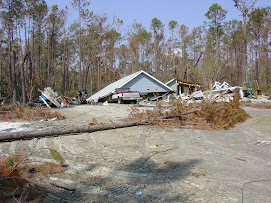
Any company that would screw an old lady certainly has no problems messin' with younger folks. Keep that chair pulled up as these videos illustrate why folks like Senator Chris Dodd and Richard Shelby live by "Show me the Money". If you is common folk and got no money then you don't count like their friends in big insurance.
Showing posts with label Claims Handling. Show all posts
Showing posts with label Claims Handling. Show all posts
Thursday, February 14, 2008
Nationwide on Your Side? Nope


Tuesday, February 12, 2008
Nationwide: Not on Your Side?
Pardners when this Cowboy says big insurance will go to great lengths to screw the elderly for a buck he means it! Pull up a chair and listen to this poor ole woman's nightmare dealing with her own insurance company Nationwide Insurance. I hope insurance industry waterboys like Senators Chris Dodd and Richard Shelby are proud of themselves and their service to big insurance. Bless their hearts their mommas must not have taught them right from wrong when they was growin' up.
Friday, January 25, 2008
Aiken v USAA: Rimkus Gets a Free Pass
Rimkus skates because they were not hired by the Aiken's according to a ruling yesterday in Aiken v USAA. I will certainly remember Judge Senter's ruling letting Rimkus off the hook next time one of my colleagues is hit with a malpractice suit by a third party over an audit report. On it's face this decision means its open season on us consumers by the hired guns of big insurance since they appear "not accountable" for their work product to third parties.
Rimkus and James W. Jordan had a contract with USAA to adjust the claim, notwith the Aikens. As a result, Rimkus did not have a duty under Mississippi law to deal fairly and in good faith with the Aikens, as does USAA. The insurance policy USAA provided the Aikens is considered a contract.
Even if the Aiken's prevail in their suit monetarily this will be a loss for the greater cause of fairness in claims adjusting so long dominated by claimant abuse since the McKinsey recommendations were adopted as the new gold standard by the insurance industry.
In any event today's Sun Herald story.
Judge dismisses Rimkus from USAA suit
Senter said there was no proof of gross negligence
By ANITA LEE
GULFPORT --Insufficient evidence of gross negligence and fraud led a judge to dismiss Rimkus Consulting Group Inc. and a company engineer from an insurance lawsuit after the policyholders' case was presented to a jury in U.S. District Court.
USAA Casualty Insurance Co. hired Rimkus to inspect the Pass Christian vacation home of David W. and Marilyn M. Aiken, which was destroyed by Hurricane Katrina. USAA is still presenting its arguments, and the case could go to the jury as early as today.
Rimkus and James W. Jordan had a contract with USAA to adjust the claim, not with the Aikens. As a result, Rimkus did not have a duty under Mississippi law to deal fairly and in good faith with the Aikens, as does USAA. The insurance policy USAA provided the Aikens is considered a contract.
The Aikens maintain USAA ordered an engineering report that would minimize wind damage to their property, insured for more than $680,000. USAA paid them $178,205 for wind damage. They received maximum benefits of $278,000 for damage from tidal surge under a federal flood insurance policy. USAA also adjusted the flood claim.
U.S. District Judge L.T. Senter Jr. noted the Aikens accepted the flood insurance money even though they contend a tornado destroyed their vacation home and boat house before Katrina moved ashore.
"At most, the evidence against Rimkus and Jordan would support no more than a finding of simple negligence in the investigation of the claim," Senter said in dismissing them from the case. "The testimony and evidence are not sufficient to support a finding that these defendants handled this matter in a grossly negligent or wanton matter with malice or with reckless disregard for the rights of the insureds."
A report Rimkus sent USAA in December 2005 concluded Katrina's wind or water was sufficient to destroy the house and boat house, saying the percentage of damage wind caused before the storm surge arrived could not be determined.
At USAA's request, Rimkus issued a supplemental report in March 2006 that detailed construction components wind could have destroyed before tidal surge destroyed the building superstructures. USAA based its payment to the Aikens on the March report. Rimkus and USAA witnesses said the supplemental report was meant to clarify how much the Aikens were owed, not to deny coverage.
Thursday, January 24, 2008
Pink Pig: How Insurance Crooks View You the Customer/Claimant
Folks this Cowboy has been educatin' the public for almost a year now on how these fancy insurance crooks masqueradin' as honest businessmen screw the public. Welp folks, nothing says how these miscreants view their own customers better than their own words. In today's installment of "As the Pink Pig Turns" we hear how a insurance company was actually proud of screwin' their customers, including a man so badly injured in a car accident he couldn't work for a year yet these crooks wouldn't give him anything. He had to sue and the rest is history. For Nick Peressini Pink Pigs do fly. But what about the countless untold others - the 80-90% that just take their screwin' from Big Insurance unable to fight back?
Here is some deposition quotes from one of them crooks. Though he admits he done wrong he is still ain't sorry for what he done.
In the deposition video, it is clear that Scott is not sorry for how Peressini's claim was handled.
Livingston: "For each one of those months, April through October, you violated the regulation, correct?"
Scott: "Yes."
Livingston: "And that wasn't fair to Mr. Peressini, was it?"
Scott: "No."
Livingston: "So you think she's lying under oath about what she did, or do you think maybe you ought to accept what she said under oath and apologize to this guy?"
Scott: "I'm not going to apologize."
Livingston: "Why not?"
Scott: "'Cause I'm not going to."
Livingston: "Why not?"
Scott: "'Cause I'm not going to.
So there you have it folks, these insurance claims adjustin' crooks think you are a rube, a conquest, another notch on their belt buckle on their way to collectin' their big fat Christmas bonus and they don't care if they cheat you. It makes this Cowboy sick to his stomach! Pull up a chair and watch the news story embedded on the web page courtesy of 7news Denver.
7NEWS looked into a company's practice that the state's insurance commissioner calls "inappropriate and unprofessional conduct."
The company, American Family Insurance, said it's done nothing wrongBut a Boulder jury said there was something wrong and handed down a $3 million verdict against American Family Insurance.
Wednesday, December 26, 2007
Purchasing Insurance: Market Transparency and Other Important Concepts Part 1
At the Mississippi Insurance Forum we have identified two main problems with Property and Casualty insurance in the aftermath of Hurricane Katrina:
1. Unfair and predatory claims handling as demonstrated by the unrefuted fact patterns in cases like McIntosh v. State Farm where State Farm threatened to fire their own engineers who found wind damage as the primary cause of the loss rather than flooding. State Farm actually ordered additional engineering reports until they received the "answer" they requested in such cases.
2. A lack of transparency in insurance product pricing, especially in the area of reinsurance.
While we will tackle both issues its worth noting the first has already received a fair amount of press attention while the second has not been addressed in detail except at a few web sites like this one. I suspect the reason the economic concept of market transparency has received such little attention is because it is complicated to explain and understand. I endeavor with this entry to start our readership along the path to understanding these important yet basic economic principles.
First we need to start with the decision to purchase a multi-peril homeowner's policy and examine the criteria consumers use when selecting an insurer. Think about it, how did you choose your insurance agent and insurer? Did you let your fingers do the walking or perhaps you received a referral from a friend of the agent? Or maybe we thought the ad we saw during the football game was good and we feel safe knowing the local agent in the spot showed up when the house burned down. Maybe as a first time homebuyer you got a good tip from your mortgage broker on who to use. Another good question is why did you buy the policy? Because it was it required by the bank or mortgage company? What about the policy limits, were they set to only cover paying off the mortgage because it was cheaper than insuring the total value? How many times since you first purchased the policy have you evaluated the risks you are paying to insure?
These are all very important questions. My professional experience preparing post Katrina income tax returns with casualty loss is that most people literally are asleep at the wheel when it comes to assessing the risks that may impact them in the future. In fact I submit it is basic human nature to avoid thinking about such unpleasant possible future events. The end result of burying ones head in the sand is invariably bad for the consumer once disaster strikes.
Post disaster hindsight reveals the complete inadequacy of the original criteria we used to select an insurer. For instance, the fact your local State Farm agent is a good guy (mine is for certain) is meaningless when the "good neighbor" refuses to pay for an insured risk. And all the accumulated advertising we've seen never prepared us for the very real possibility the good neighbor will force many of it's customers to use the court system to collect on the policy as a matter of internal claims handling policy.
Had we used good criteria originally to purchase insurance, we would have considered variables such as recent claims handing histories of these companies in our purchase decision. I've had people I know off the coast tell me they are not worried about State Farm covering windstorm risks because they are "too high to flood". Human nature then takes over for a time, refusing to believe that State Farm refused to cover obvious wind damage in Oklahoma City after an F5 tornado struck there in May 1999 or that a jury there found, "that State Farm "recklessly disregarded" its duty to deal fairly with policyholders, doing so "intentionally and with malice" through the use of biased expert opinions after the 1999 tornado." Perhaps we decide to switch to another insurer such as Allstate only to find out their internal documents describe treating a claimant/customer with "Boxing Gloves" instead of "good hands" and their record in customer treatment in automobile insurance claims appears abysmal. In fact we find out that according to the AM Best, "In the decade after Allstate instituted the McKinsey program in 1995, the amount of money it paid out per premium dollar in car accident cases declined from about 63 cents to 47 cents". Most importantly we find out the lack of good information the consumer has to evaluate insurers is stunning.
Insurers on the other hand know a good bit about their customers. They know your credit score for instance and will rely on a computer model to determine how your claim is handled. In a previous post on this forum I detailed how insurers spend big money on weather modeling to assess the risk they face. In short most consumers use subjective, sometimes emotional criteria to purchase insurance while insurance companies use objective criteria in how they conduct business. The gap in market knowledge between insurers and consumers is referred to in economics as Information Asymmetry, and is defined as "A situation in which one party in a transaction has more or superior information compared to another. This often happens in transactions where the seller knows more than the buyer, although the reverse can happen as well. Potentially, this could be a harmful situation because one party can take advantage of the other party’s lack of knowledge."
In future posts we will further examine the concepts of Asymmetric information and how it translates into premium pricing, especially in reinsurance.
sop
Subscribe to:
Posts (Atom)